Ever wonder why your cleaner sprays one bottle and not another? Or why some services brag about “sanitization” while others offer a full “disinfection service”? If you’re scratching your head, you’re not alone. In Adelaide, these terms get tossed around a lot. But they’re not the same thing. To put it simply: sanitisation is like giving a surface a quick shower to make it “good enough,” whereas disinfection is more like a deep, germ-killing bath. Think of sanitization as the friendly cousin who shows up with soap and a sponge and disinfection as the superhero with a hazmat suit and germ-crowbar.
Let’s dive in, clear up the confusion (no pun intended), and help you decide which service your home or office really needs.
Cleaning vs. Sanitization vs. Disinfection: The Hygiene Hierarchy
First, let’s set the stage. There’s a difference between cleaning, sanitising, and disinfecting. It’s a bit like the difference between dusting, wiping with soapy water, and using a full-strength germicide; each step goes deeper.
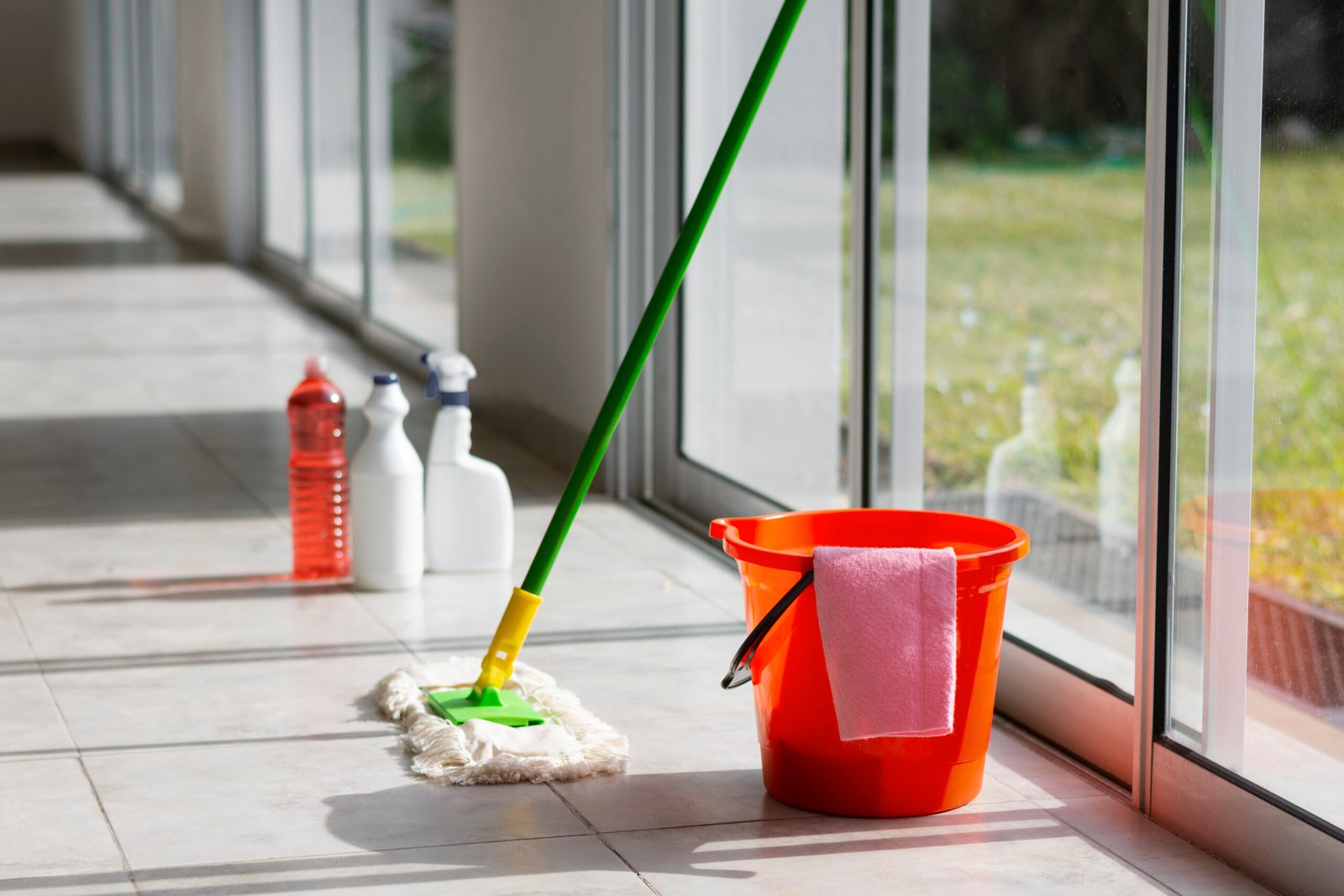
- Cleaning removes visible dirt, spills, and debris (like dust or grease). It’s the everyday wipe-down with detergent or soap. In Safe Work Australia’s guide, cleaning “means to physically remove germs (bacteria and viruses), dirt and grime from surfaces using a detergent and water solution. “So if you mop your floor or wipe a countertop with dish soap, that’s cleaning. It makes things look clean and can remove some germs stuck to dirt, but it doesn’t kill all the nasty stuff hiding out.
- Sanitisation steps it up. Sanitising reduces germs on a surface to a “safe” level as defined by health standards. For example, a sanitising wipe or spray might kill 99.9% of certain bacteria, but it may not handle viruses as strongly. As a Food Standards Australia New Zealand fact sheet explains, cleaning (dirt removal) is done first, and then sanitizing “destroys microorganisms” to make surfaces safe for food handling. In everyday terms, sanitising is ideal for kitchens and bathrooms think of sanitisation as the professional making sure your bench and sink are hygienic enough for cooking or eating. It’s like a very thorough rinse.
- Disinfection goes all-out. It uses stronger chemicals or methods to kill almost all germs (both bacteria and viruses) on a surface. In other words, disinfecting is more aggressive. According to one Australian hygiene expert, sanitising “focuses primarily on bacteria,” whereas disinfecting “broadens that focus to also include the reduction of viruses”. Essentially, if sanitisation is a nice warm shower, disinfection is like blasting the area with a powerful germ-killing ray. Hospitals, clinics, or any setting where you need a super-high level of cleanliness rely on disinfection. Even during flu season or a pandemic, businesses might bring in a disinfection service for assurance that “100% of germs” are wiped out.
How Sanitisation Service Works (The Gentle Clean)
When you book a sanitisation service for your home or office, the process typically begins with a thorough pre-cleaning stage. This initial step is essential to ensure effective sanitization. First, the cleaning team removes all visible dirt and debris. This includes scrubbing surfaces, sweeping floors, and vacuuming dust, crumbs, and spills. The goal is to eliminate any physical contaminants present in the space.
This step is crucial because accumulated dirt can act as a barrier, preventing sanitising agents from reaching and eliminating germs effectively. By clearing away these obstacles, the sanitisation process becomes more efficient and delivers better hygiene results.
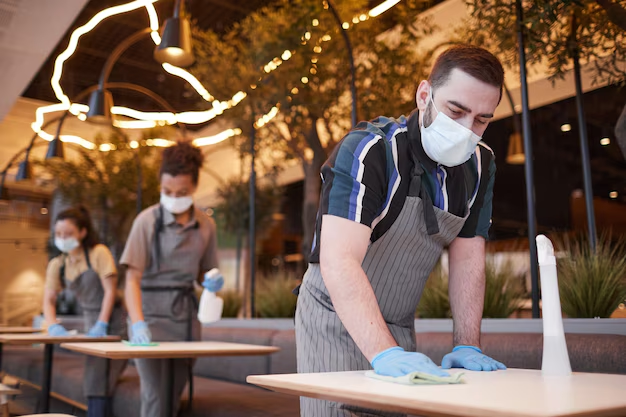
Once the space looks clean, they apply a sanitising product. These might be hospital-standard kitchen sanitizers or diluted bleach solutions. According to Australian health guidelines, surfaces that contact food must be both “clean and sanitary.” This often means the cleaners spray or wipe surfaces (benches, doorknobs, toilets, etc.) with a sanitizer. The goal is to knock down the number of germs to safe levels, not necessarily to eradicate every last one.
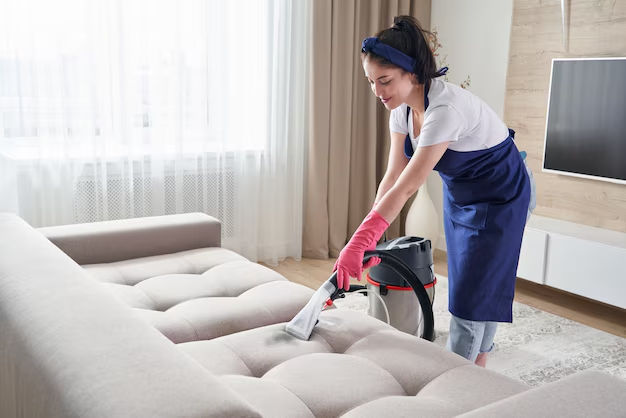
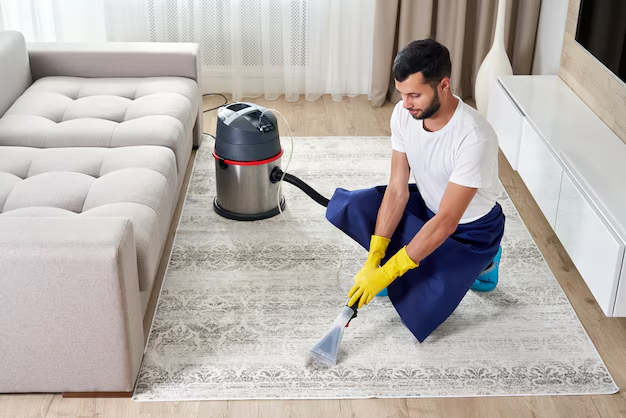
You’ll often find sanitisation services in places like restaurants, cafes, schools, or regular home cleanings where a baseline of hygiene is required. For example, after cleaning an oven during your “oven cleaning Adelaide” service, the company might also sanitize the stovetop and surrounding counters removing grease and then sanitising to reduce bacteria. Likewise, “house cleaning Adelaide” packages commonly include sanitising bathrooms and kitchens. Many carpet cleaning services also add a sanitisation step; after shampooing carpets, they might spray an antimicrobial solution to freshen and partially disinfect the fibers. Sanitisation is frequent and preventive: think weekly or monthly touch-ups, like changing the bedding or clearing out the fridge, to keep everyone healthy.
In short, sanitisation is the everyday hero of cleaning. It uses routine chemicals, is safe for most surfaces, and is quick enough for regular services. But it’s not meant to deal with outbreaks or super-strong germs. It’s like washing dishes every day versus deep-scrubbing the garage every year.
How Disinfection Service Works (The Heavy Hitter)
Now picture a disinfection service. This is for when you want serious germ warfare. After the initial cleaning step (removing dirt and debris), professionals use high-grade disinfectants; these can include hospital-strength chemicals. They might even use advanced methods like UV light or electrostatic sprayers to coat surfaces.
Safety is key here: the cleaners wear protective gear because these chemicals are strong. The disinfectant is applied and left to dwell (sit for a set time) to kill microbes. Safe Work Australia notes it’s crucial to “clean before disinfecting because dirt and grime can reduce the ability of disinfectants to kill germs.” This ensures that the fog or spray actually touches the microbes and doesn’t get blocked by gunk.
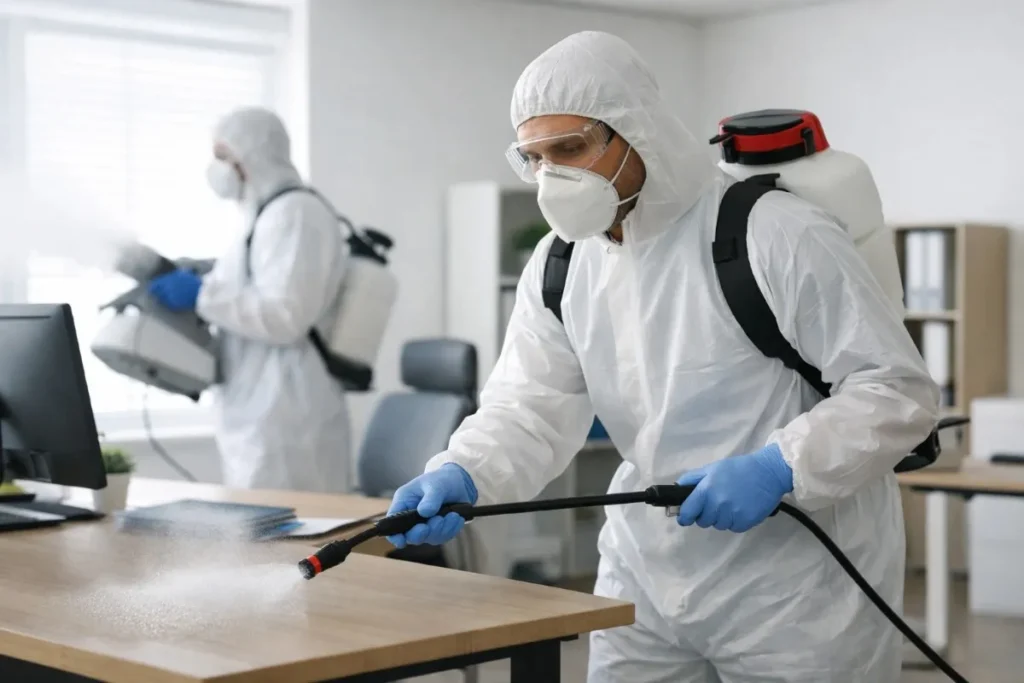
Disinfection services are what companies call in after sickness spreads or before something critical. For example, an office with a case of the flu might pay for a disinfection service to “zap” every doorknob, light switch, and lunchroom table. Likewise, medical and aged-care facilities schedule disinfection rounds regularly. Even if you’re just a germaphobe prepping for moving into a new home, you might hire one cleaning service that offers deep cleaning services in Adelaide including disinfection of high-touch areas.
According to cleaning pros, disinfectants are chosen for their ability to kill both bacteria and viruses. One industry guide explains that sanitising “eliminates at least 99.9% of harmful bacteria,” but disinfecting is about reaching that higher bar of killing viruses and more resilient pathogens. When done right, a disinfection service will leave a home or office surface microbial-free (to the limits of detection), essentially a clean slate.
Side-by-Side: Sanitization vs. Disinfection
For clarity, here’s a quick comparison table of the three steps:
| Process | What It Does | Typical Germ Kill Level | Common Uses |
|---|---|---|---|
| Cleaning | Removes dirt, grease, debris | Some germs removed | Daily housekeeping (vacuum, mop, wipe) |
| Sanitisation | Reduces germs to a safe level | ~99.9% of bacteria (virus may remain) | Kitchens, bathrooms, schools, restaurants (food prep areas) |
| Disinfection | Kills most bacteria & viruses | ~99.999% or higher of germs (broad-spectrum kill) | Hospitals, after illness exposure, deep cleaning services |
This table shows why both steps can be useful: cleaning sets the stage, sanitisation is the routine upkeep, and disinfection is the blitz.
When to Choose Sanitisation or Disinfection in Adelaide
How do you decide which space you need? Here are some scenarios:
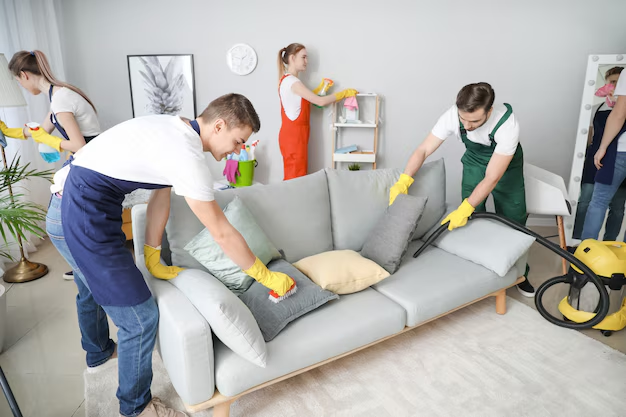
- Everyday Living / Offices: For routine clean-ups, sanitisation is usually enough. If you just want your home sparkling and “low-risk,” a standard house cleaning Adelaide service with sanitising is fine. Regular dust, spills, pet hair sanitisation handles it. Commercial cleaning services (like those for office buildings or shops) often include sanitising bathrooms and kitchens as part of their package.
- Post-Illness: If someone had a contagious illness (flu, stomach bug, COVID, etc.), go for disinfection services. These germs can linger on surfaces. A professional disinfection will target the doorknobs, keyboards, phones, and kitchen counters that might harbor the virus. Often businesses in Adelaide will call in a disinfection service after an outbreak to reassure employees and customers.
- High-Risk Spaces: Restaurants or cafés have special rules. They already use sanitisation all the time (e.g. sanitising chopping boards and tables). Many commercial kitchen cleaning services combine regular cleaning with a final sanitisation step on cookware and surfaces. But once in a while, say, after a power outage ruined food or a known contamination, they might do a full disinfection sweep. The same goes for day care centers, gyms, or aged care homes in Adelaide: if germs are a big worry, go heavy.
- Special Cleaning Jobs: Some tasks like “oven cleaning Adelaide” or “carpet cleaning services” focus on grime removal. Still, smart cleaners often follow up with sanitisation sprays on the cleaned items (e.g. a sanitized oven interior or freshly shampooed carpet). Rarely would you disinfect an oven or carpet, but sanitising them can prevent mold and bacteria growth.
In short, think of sanitisation as routine maintenance and disinfection as emergency measures. If you just had contractors in (or those nasty holiday flu bugs), ask your cleaner: “Can we also do a disinfection service?” It might be worth it for peace of mind.
Professional Cleaning Services in Adelaide
In Adelaide, many cleaning companies now list sanitisation and disinfection among their services. You’ll see offerings like:
- House cleaning Adelaide – routine tidy-up, usually with sanitising wipes for bathrooms/kitchens.
- Oven cleaning Adelaide – degrease and scrub the oven, often followed by sanitisation of surrounding surfaces.
- Deep cleaning services Adelaide – an intensive clean (often pre-move or spring cleaning) that can include sanitisation or even disinfection of critical spots.
- Carpet cleaning services – shampooing carpets; some add sanitiser or antimicrobial treatment afterwards.
- Commercial cleaning services (commercial cleaning) – office and building maintenance with regular sanitisation of touchpoints.
- Commercial kitchen cleaning services – special for restaurants, sanitising food zones; disinfection if needed (especially for pests or after unknown contaminants).
Each of these may use either sanitisation or disinfection depending on your needs. For example, a standard carpet cleaning will likely just sanitize the fibers; a true disinfection service wouldn’t usually target carpets unless it was part of a whole-room pandemic cleanup.
By law and industry standard, Adelaide businesses that serve food or handle medical cases follow clear protocols. Agencies like Food Standards Australia New Zealand note that cleaning and sanitising are mandated for food safety. Similarly, Safe Work Australia recommends when to add disinfecting to your routine.
Think of it this way: sanitisation service is great for keeping your everyday environment fresh and safe. Disinfection service is there for those times you need that extra lock-down on germs. If you’re unsure which you need, many Adelaide cleaners will advise the right level of service.
Conclusion
At the end of the day, both sanitisation and disinfection services aim to protect your health; it’s just a matter of degree. A regular clean and sanitisation will keep things nice and fresh, which is perfect for your day-to-day life in Adelaide. But when you need to kick germs to the curb, a disinfection service is the heavy artillery that brings in the big guns.
So next time you book a cleaner, think: Do I just need a wipe-down and sanitization (daily maintenance), or do I need a full germ-zapping disinfection? And remember, you can often have both in one go just let the cleaners know. Stay safe, stay healthy, and keep those surfaces clean.