A medical centre can look spotless and still have cleaning gaps where they matter most. In Adelaide’s busy healthcare environment, reception desks, treatment rooms, waiting areas and frequently touched surfaces all see constant traffic. That makes professional cleaning more than a matter of appearance; it becomes part of maintaining a hygienic, safe and welcoming healthcare environment.
Good Medical Centre Cleaning Services are designed around the way a healthcare facility actually operates. The approach needs to consider patient movement, staff workflows, high-touch surfaces, waste handling and areas that require more frequent attention. For practices looking for a reliable cleaning partner, reviewing professional commercial cleaning solutions is a useful first step.
For Adelaide clinics, the right service should also be consistent. A cleaner who simply vacuums, mops and empties bins is providing general cleaning, not necessarily the specialised approach expected in a healthcare setting. This guide explains what should be included and what clinic managers should ask before engaging a provider.
What Are Medical Centre Cleaning Services?
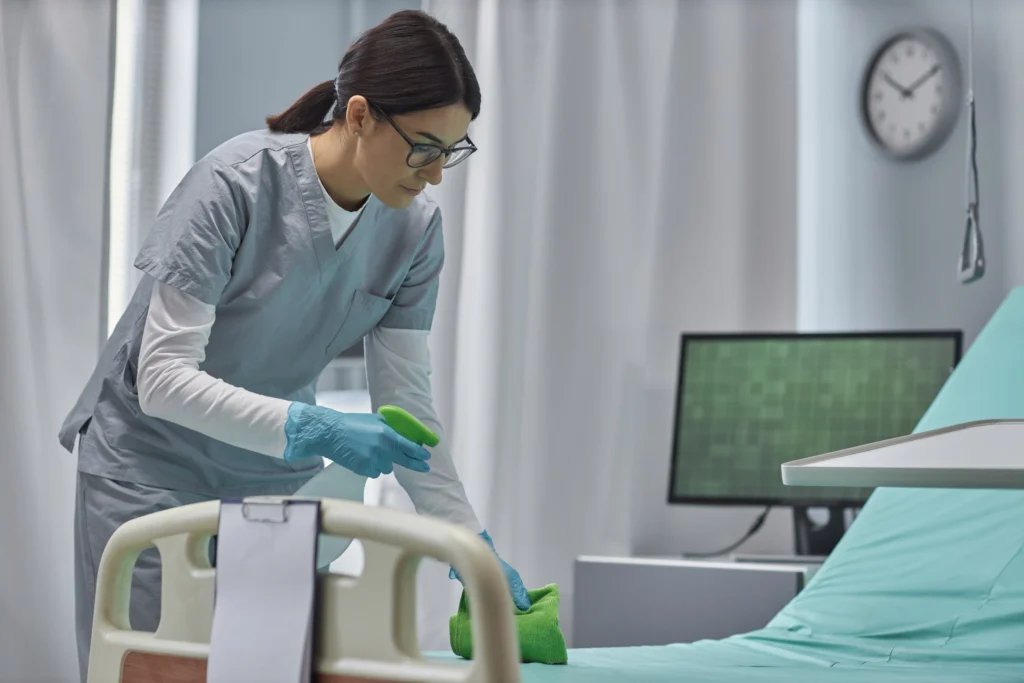
Medical Centre Cleaning Services are specialised cleaning programs designed for healthcare environments such as general practices, specialist clinics, allied health facilities and other medical premises. They combine routine cleaning with appropriate sanitisation, disinfection and hygiene practices based on the needs of each facility.
Unlike ordinary office cleaning, healthcare cleaning requires greater attention to cross-contamination risks and high-contact areas. A consultation room, for example, has different cleaning priorities from a staff office. Similarly, a waiting room needs regular attention because patients and visitors continuously move through it.
This is why medical cleaning services Adelaide clinics use should be planned around the facility rather than delivered as a generic checklist. The objective is a consistently clean environment that supports good hygiene practices without disrupting normal clinical operations.
Why Medical Centre Cleaning Requires a Specialised Approach
Healthcare facilities have a unique combination of people, equipment, surfaces and activities. Patients may arrive while unwell, staff may move between rooms, and frequently touched surfaces can receive repeated contact throughout the day. A cleaning plan needs to account for that reality.
Professional Medical Centre Cleaning Services should therefore distinguish between ordinary dirt removal and tasks where sanitisation or disinfection is required. Cleaning generally removes dirt and organic material, while disinfection is used to reduce microorganisms on appropriate surfaces. The two processes are related, but they are not interchangeable.
A professional medical cleaning team should also understand that product selection matters. Chemicals need to be suitable for the surface and used according to the manufacturer’s instructions. More chemicals does not automatically mean better cleaning; correct application is what matters.
What Should Be Included in a Medical Centre Cleaning Checklist?
A well-designed cleaning program should cover the areas patients see and the areas they never notice. Reception counters, waiting-room furniture and door handles are obvious priorities, but staff areas, floors, bathrooms and less visible touchpoints also need consistent attention.
The exact frequency should depend on patient volume, facility layout and the type of clinical services provided. A small allied health practice may have different requirements from a high-traffic medical centre.
A typical program may include:
- Cleaning and disinfecting high-touch surfaces.
- Cleaning consultation and treatment rooms.
- Sanitising suitable bathroom surfaces and fixtures.
- Vacuuming and mopping floors.
- Cleaning reception and waiting areas.
- Cleaning staff kitchens and common areas.
- Emptying and handling general waste appropriately.
- Cleaning doors, handles, switches and other frequently touched points.
- Reporting visible maintenance or hygiene concerns to management.
The important point is consistency. Medical Centre Cleaning Services should operate from an agreed scope so staff know what is being cleaned, how often it is completed and which areas require additional attention.
Reception and Waiting Areas Need More Than a Quick Vacuum
The reception area creates the first impression of a medical centre, but its importance goes beyond aesthetics. Patients frequently touch reception counters, chairs, door handles, payment terminals and other shared surfaces.
Medical centre cleaners Adelaide clinics engage should pay close attention to these high-contact points. Dusting visible surfaces is useful, but it does not replace appropriate cleaning and disinfection procedures where those processes are required.
Waiting-room furniture should also be considered. Armrests, chair backs, side tables and other commonly touched surfaces can accumulate dirt through normal daily use. Regular attention helps maintain a cleaner environment and gives patients confidence that hygiene is taken seriously.
Consultation and Treatment Rooms
Consultation rooms require a more focused approach because they are directly involved in patient care. Cleaning should cover appropriate surfaces, floors, handles, switches and other areas that receive frequent contact.
Medical Centre Cleaning Services should be flexible enough to accommodate different room types. A standard consultation room may have different cleaning priorities from a procedure room or treatment space.
It is also important to follow the healthcare facility’s own protocols. Cleaning contractors should work within agreed procedures rather than assuming every medical practice operates identically. Clear communication between the clinic and cleaning provider helps avoid missed areas and unnecessary disruption.
Bathrooms and High-Traffic Areas
Bathrooms are another area where patients quickly notice whether a facility is being maintained properly. Floors, toilets, basins, taps, mirrors, dispensers and touchpoints should be cleaned according to the agreed service schedule.
Healthcare cleaning services Adelaide providers offer should also consider corridors and entrances. These spaces can collect dust and tracked-in material throughout the day, particularly during wet weather or periods of heavy patient traffic.
Floor cleaning should match the surface. Carpet, vinyl, ceramic tile and other flooring materials require different cleaning techniques and products. A professional team should understand these differences rather than treating every floor in exactly the same way.
Cleaning vs Sanitising vs Disinfecting
These terms are often thrown around as if they mean the same thing. They do not.
Cleaning focuses on removing dirt, dust and organic material. Sanitising generally aims to reduce microorganisms to an acceptable level, while disinfection uses an appropriate disinfectant to destroy or inactivate many microorganisms on suitable surfaces.
Medical Centre Cleaning Services may incorporate all three approaches depending on the area and the healthcare facility’s requirements. The correct process depends on the surface, contamination risk, product instructions and applicable procedures.
For authoritative Australian information on infection prevention and control in healthcare settings, healthcare operators can refer to the Australian Guidelines for the Prevention and Control of Infection in Healthcare.
Infection Control and Healthcare Cleaning
Cleaning supports infection prevention, but it should not be presented as a replacement for a complete infection-control program. Healthcare facilities operate within broader systems involving hand hygiene, personal protective equipment, waste management, clinical procedures and environmental controls.
Infection control cleaning services should therefore complement the facility’s established protocols. Cleaning contractors need clear instructions about the environment they are entering and should understand which cleaning tasks are routine and which require specific procedures.
For this reason, specialised healthcare cleaning is best treated as a partnership between the medical practice and its cleaning provider. The clinic understands its clinical environment; the cleaning team brings cleaning expertise. When those two areas work together, the result is much stronger.
What Makes Professional Medical Cleaners Different?
Professional medical cleaners should bring more than equipment and cleaning products. Training, consistency, communication and attention to detail matter just as much.
A reliable team should understand safe chemical handling, surface compatibility, cleaning sequences and the importance of avoiding cross-contamination during routine tasks. They should also be able to follow site-specific instructions and communicate when something falls outside the agreed cleaning scope.
Medical Centre Cleaning Services become particularly valuable when a provider can deliver the same standard repeatedly. One excellent clean followed by several average visits does not create a reliable hygiene program. Healthcare facilities need consistency.
How Often Should a Medical Centre Be Cleaned?
There is no single frequency that suits every clinic. Cleaning schedules should reflect patient numbers, operating hours, room usage, clinical activities and the nature of services provided.
A busy practice may require frequent attention to reception, waiting areas, bathrooms and high-touch surfaces throughout the day, while lower-traffic administrative areas may need less frequent cleaning.
The key is to establish a documented schedule. Medical facility cleaning Adelaide providers should discuss the clinic’s daily workflow and determine which tasks should happen daily, periodically or when specific circumstances arise.
Choosing Products for Medical Cleaning
The cleaning product itself is only one part of the equation. The surface, application method, contact time and manufacturer’s instructions all influence whether a product performs as intended.
Professional Medical Centre Cleaning Services should use products appropriate for their intended application and follow label directions. Using an overly aggressive product on the wrong surface can cause damage without providing a meaningful hygiene advantage.
This is particularly relevant for modern medical centres with sensitive equipment, coated surfaces, electronics and specialist flooring. Good cleaning protects the facility as well as keeping it presentable.
Waste, Spills and Unexpected Cleaning Needs
Routine cleaning is only part of maintaining a medical facility. Clinics can experience unexpected spills, heavily soiled areas or situations requiring prompt attention.
Cleaning contractors should have clear procedures for dealing with these situations. However, clinical and regulated waste must always be handled according to the healthcare facility’s established waste-management procedures and applicable requirements.
Commercial medical cleaning services should also make it easy for clinic managers to report problems. If a bathroom needs urgent attention or a particular room requires additional cleaning, there should be a clear communication process rather than a hunt for the cleaner of the day.
Medical Centre Cleaning Services and Staff Workflow
A good cleaning service should fit into the clinic rather than constantly getting in the way. Timing matters.
Cleaning during peak patient hours can create unnecessary disruption, while cleaning immediately before a busy clinical period may undo some of the benefit. Providers should discuss opening hours, quieter periods and room availability before establishing a schedule.
For Adelaide practices, this can be particularly important when several healthcare professionals share the same facility. A thoughtful Medical Centre Cleaning Services plan can divide work into suitable periods and reduce interference with patient care.
How to Assess a Cleaning Provider
Price matters, but it should not be the only consideration. A cheaper quote can become expensive if it excludes important areas, provides inconsistent service or requires clinic staff to manage problems themselves.
When comparing providers, look at the scope of work, staff training, supervision, communication, insurance, cleaning procedures and flexibility. Ask exactly what is included rather than accepting a vague promise that the facility will be “deep cleaned”.
A strong provider should be comfortable explaining its process. If a company cannot clearly tell you what it cleans, how often it cleans it and how exceptions are handled, that is worth considering before signing an agreement.
Common Mistakes Clinics Should Avoid
One of the most common mistakes is treating healthcare cleaning like ordinary office cleaning. A clinic has different priorities, and the cleaning plan should reflect them.
Another mistake is focusing only on visible areas. A sparkling reception desk does not compensate for neglected touchpoints, bathrooms or frequently used clinical spaces.
Finally, avoid choosing a provider solely because of the lowest hourly rate. Effective Medical Centre Cleaning Services are about outcomes, reliability and an appropriate scope of work. The cheapest option is not necessarily the most economical when cleaning gaps create extra work for staff.
Conclusion
Effective Medical Centre Cleaning Services should cover far more than floors and visible dust. Reception areas, waiting rooms, consultation spaces, bathrooms, high-touch surfaces and staff areas all require appropriate attention, while cleaning, sanitising and disinfection should be used correctly for each situation. A clear cleaning schedule, trained cleaners, suitable products and regular communication with clinic management can help create a consistent and reliable healthcare cleaning program.
If you are looking for dependable Medical Centre Cleaning Services in Adelaide, AussieBrite Services can help develop a cleaning approach suited to your facility, operating hours and hygiene priorities. Contact the team today to discuss your requirements and explore their commercial cleaning services for a tailored cleaning solution that supports a cleaner, more professional medical environment.
-
1. What should Medical Centre Cleaning Services include?
They should generally include cleaning of reception and waiting areas, consultation rooms, treatment spaces, bathrooms, floors, high-touch surfaces and relevant staff areas. The exact scope should be customised according to the facility, patient traffic and clinical activities.
-
2. Are medical cleaning services different from normal commercial cleaning?
Yes. Medical environments require greater attention to hygiene, surface disinfection, cleaning sequences and the facility’s infection-control procedures. General office cleaning methods may not address the specific requirements of a healthcare environment.
-
3. How often should a medical centre be professionally cleaned?
Frequency depends on patient volume, facility size, operating hours and the type of healthcare services provided. High-traffic areas may require more frequent attention than low-use administrative spaces. A professional assessment can help establish an appropriate schedule.
-
4. Should a cleaning company handle clinical waste?
Clinical and regulated waste should be managed according to the healthcare facility’s established procedures and applicable Australian requirements. A cleaning contractor should not automatically be assumed to provide clinical waste services unless those services are specifically included and appropriately arranged.
-
5. How can I choose the right medical cleaning company in Adelaide?
Look for a provider with relevant healthcare-cleaning experience, clear service scopes, trained staff, appropriate insurance and reliable communication. Ask for details about cleaning frequency, high-touch surfaces, disinfection procedures and how unexpected cleaning requirements are handled.