In 2026, the standards and expectations around hygiene in healthcare environments are evolving faster than ever before. Private clinics and specialized healthcare facilities are adopting cutting-edge technologies and smarter sanitation practices to ensure safer, more efficient environments for both patients and staff.
From AI-powered disinfection systems to eco-friendly cleaning solutions, the landscape of private medical centers cleaning is undergoing a major transformation. These advancements are not only improving cleanliness outcomes but also redefining how private medical centers cleaning is managed on a daily basis.
As regulations tighten and patient awareness grows, private medical centers cleaning has become a critical focus area, pushing facilities to innovate and stay ahead. In this blog, we explore the key innovations that are shaping the future of private medical centers cleaning and what they mean for the healthcare industry.
High-Tech Helpers in Private Medical Centers Cleaning: Robots, UV & Mops
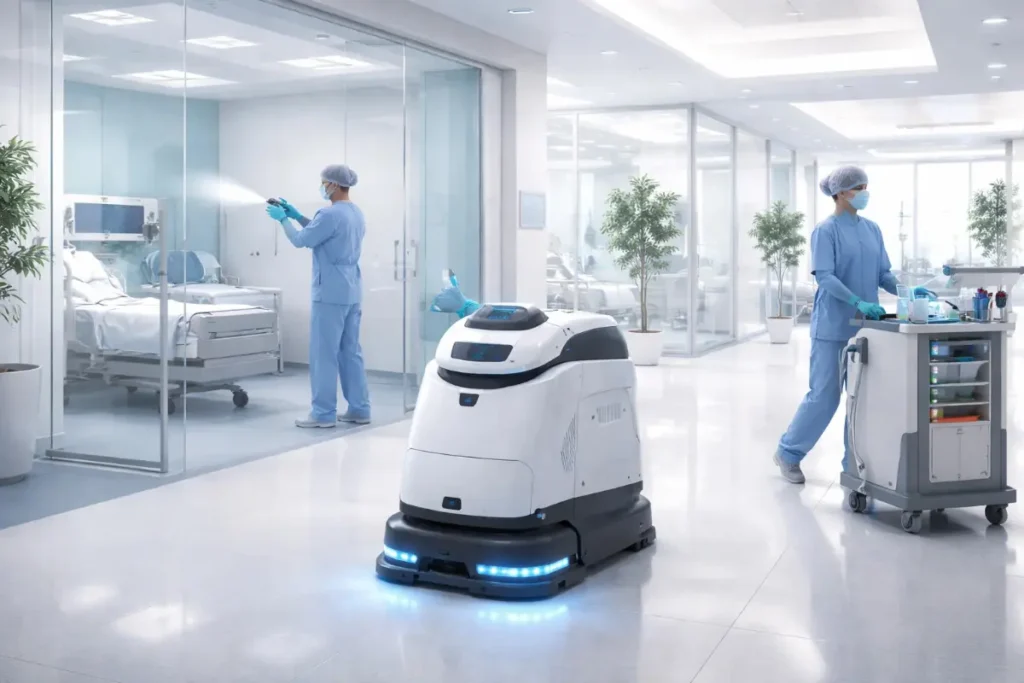
For instance, instead of manual mopping, Adelaide’s Lyell McEwin Hospital introduced the Tennant T7AMR robo-scrubber in 2020. Think of it as a Roomba on steroids, wiping and polishing vast corridors with minimal human input.
These autonomous scrubbers use fancy sensors (LiDAR, cameras, AI brains) to avoid walls, chairs, and people, so they can run even in occupied spaces. You’ll still find manual mop buckets in closets, but much of the heavy-duty floor work can be offloaded to machines. The result? More consistent clean floors and freed-up staff time for tasks only humans can do.
Meanwhile, disinfection got its own robotic stars. UV-C robots like “Thor” (yes, the glow-in-the-dark bot) zip around patient rooms after a patient leaves. Adelaide’s big clinics aren’t left behind; new private medical centers cleaning policies mean UV units are used for terminal cleans, especially in surgical suites.
These bots blast invisible UV-C light to break up pathogen DNA. One study found such a robot can achieve a Log 6 (99.9999%) kill of microbes in minutes! It’s no gimmick; these devices drastically reduce germs in spots even fastidious mopping misses (faucets, keyboards, and ceilings).
Key Innovations at a Glance:
- Autonomous floor scrubbers: Robots like the Tennant T7AMR that scrub floors without an operator, raising floor-cleaning consistency and letting staff focus on detail cleaning.
- UV-C disinfection units: Mobile robots or fixed emitters bathing rooms in UV light studies show ~99.9999% germ-kill.
- Electrostatic sprayers: Charged disinfectant misters wrap around objects, giving up to 10× coverage over traditional spraying (even the underside of chairs gets sanitized).
- Antimicrobial coatings: Special paints or films on high-touch surfaces (door handles, bed rails) that constantly kill or neutralize microbes on contact.
- Data-driven checklists: Smart cleaning logs and IoT sensors (e.g., RFID tags or app tracking) ensure no room or nook is forgotten. Real-time alerts tell staff when to clean again.
- Protocols & Training: New training modules and detailed checklists tailored to private medical centers cleaning, making sure staff can use all these tools safely and correctly.
Going Green and Smart Trends in Private Medical Centers Cleaning
Tech isn’t just about lasers and bots; sustainability is another big trend. In fact, private medical centers cleaning is going green. By 2026, many Adelaide clinics are replacing harsh chemicals with eco-friendly detergents and hydrogen-peroxide systems. Why? Repeated exposure to bleach or quaternary ammonium compounds can cause staff skin and respiratory issues and harms waterways. So hospitals are shifting to biodegradable cleaners that break down into harmless elements. The goal is to kill germs without hurting the air or environment.
This shift is backed by evidence and official advice. Studies note that frequent cleaning with simple detergents often suffices in “non-critical” zones like lobbies or hallways; you don’t need hospital-grade bleach everywhere. Australian infection-control guidelines emphasize that cleaning itself is a first-line defense: environmental cleaning “assists in preventing transmission of infectious agents.” In other words, a good scrub with green soap can do much of the job, reducing how often we must use powerful disinfectants. By cleaning regularly and smartly, clinics protect patients and the planet at once.
And yes, “going smart” ties in too. Some clinics use IoT floor mats or barcode scans to confirm a room was cleaned to protocol. Every swipe or sensor trigger is logged, preventing forgotten corners.
Put it all together: robotic scrubbers, UV robots, eco-friendly sprays and digital checks, and you have a future-proof, eco-conscious cleaning system. After all, a sterile hospital and a healthy environment are not mutually exclusive.
Comparing Methods for Private Medical Centers Cleaning: Cost, Efficacy & Sustainability
When clinics consider an upgrade, they balance cost against results. Private medical centers cleaning teams must know what each tool delivers. Here’s a quick rundown of modern options popping up in 2026:
| Method | Approx Cost | Efficacy | Sustainability |
|---|---|---|---|
| Manual cleaning (mop/wipe) | Very low (labor-intensive) | Good for visible dirt; risks missing hidden pathogens | Depends on products (can be very green if natural cleansers used) |
| UV-C Disinfection Robot | High ($20k–$125k) | Very high (e.g. log-6 kill) | No chemicals (just electricity); power-hungry but no fumes |
| Electrostatic Sprayer | Moderate (~$1k–$2k) | High (even coating, up to 10× coverage) | Uses disinfectant (choose biodegradable options) |
| Autonomous Floor Robot | Moderate (~$5k–$10k) | High for floors (consistent scrubbing routes) | Efficient cleaning; uses water and power, reduces chemical use |
| Antimicrobial Coatings | Moderate (per installation) | Ongoing (kills microbes on contact, continually) | Reduces need for frequent chemicals once applied |
The table above is illustrative. For example, a top-end UV-C robot like “Thor” costs about $125K at Sydney Adventist Hospital, whereas a basic electrostatic mister is only a few thousand dollars.
Notice the trade-offs: manual mopping is cheap but misses germs; UV robots disinfect thoroughly but cost a bundle; green products protect staff and earth; and smart tech makes sure nothing is overlooked.
Every private medical centers cleaning crew must weigh these factors. No one solution is perfect on its ownoften the best approach is a mix (machines + people + sensible chemicals).
Private Medical Centers Cleaning in Adelaide: Local Trends
So how does all this look on our home turf? In Australia, even private clinics must meet rigorous infection rules. Many Adelaide cleaning firms now market “healthcare cleaning” packages alongside their standard services.
For example, companies that provide office cleaning services often add on specialized clinic cleaning protocols. Some local businesses even loan out UV wands and electrostatic sprayers just like the big hospitals do, so clinics can deep-clean between patients.
A quick story: I chatted with the manager of a private Adelaide clinic. She joked that after watching a viral video of a UV disinfection robot, she half-expected their next floor tech to arrive by jetpack. It turns out their team is seriously considering a robotic scrubber in the next budget round! Even in laid-back Adelaide, the buzz is catching on.
For context, the Australian Guidelines for Infection Prevention stress that cleaning is critical: high-touch surfaces “should be cleaned at least daily” and environmental cleaning “assist[s] in preventing transmission” of germs. So private medical centers’ cleaning isn’t just a buzzword; it’s a frontline defense built right into how we run clinics safely.
The Future of Private Medical Centers Cleaning
By 2026, private medical centers cleaning will feel futuristic but familiar. We’ll still need human cleaners after all; machines and bots are tools, not total replacements. But these tools will help us reach levels of hygiene we’ve never had before. Imagine walking into an exam room where the floor was scrubbed by a robot and every surface got a UV kiss since your last visit, all while staff used gentle green cleansers; the place would feel like a clinic from tomorrow.
The key takeaways? New gadgets really do boost cleanliness when used wisely, and “going green” doesn’t mean skimping on safety. It means smarter choices that protect people and the planet.
So what do you think? Have you seen any of these high-tech cleaners around Adelaide? Maybe in your local hospital, gym or even school? Drop a comment or share your experience! Keeping private medical centers cleaning up-to-date is a team effort, and we’d love to hear your stories.