A clean workplace rarely gets applause. Nobody walks into the office on Monday and says, “That carpet looks absolutely magnificent.” Yet the moment the bins are full, the kitchen bench is sticky or the reception floor looks tired, everyone notices. That is why a good cleaning strategy matters more than most businesses realise.
For growing businesses in Albany, Commercial Cleaning Services should be planned around the way your workplace actually operates. An office, retail space, warehouse and professional practice can all need very different levels of attention. Rather than choosing a generic package and hoping for the best, you can build a cleaning plan that fits your people, property and working hours. If you are exploring professional support, visit AussieBrite Services to learn more about available cleaning solutions.
What Are Commercial Cleaning Services?
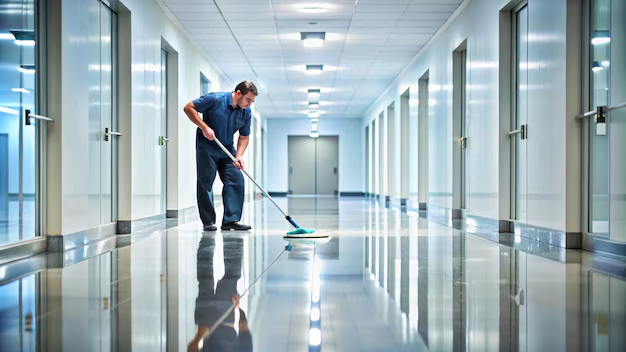
Commercial Cleaning Services are professional cleaning arrangements designed for business premises and other commercial environments. They can include routine cleaning, floor care, bathroom maintenance, rubbish removal, kitchen cleaning, dusting, high-touch surface cleaning and periodic deep-cleaning tasks.
The important part is not simply what gets cleaned. It is how the service is organised. Professional cleaning should have a clear scope, agreed frequency, suitable equipment and a standard that both the business and cleaning team understand.
Commercial Cleaning Services work best when they are tailored to the property. A ten-person office in Albany may have relatively light traffic, while a retail shop could have hundreds of people walking through its doors each day. Treating those two spaces identically would be like giving both businesses the same shoe size and calling it a perfect fit.
Before building your plan, consider how the building is used, which areas become dirty fastest and what customers or employees see first. Those observations provide the foundation for a realistic cleaning schedule.
Why Your Business Needs a Commercial Cleaning Plan
A commercial cleaning plan gives your workplace a repeatable system. Instead of relying on memory or waiting for someone to complain, you know what needs attention and when it should happen.
A strong plan identifies each major area of the property and assigns an appropriate cleaning frequency. Reception areas, bathrooms, kitchens and entrances may need frequent attention, while storage rooms or low-traffic offices may need less.
Commercial Cleaning Services become easier to manage when expectations are written down. Managers know what has been agreed, cleaners know what they need to complete and employees understand what is handled professionally versus what remains their responsibility.
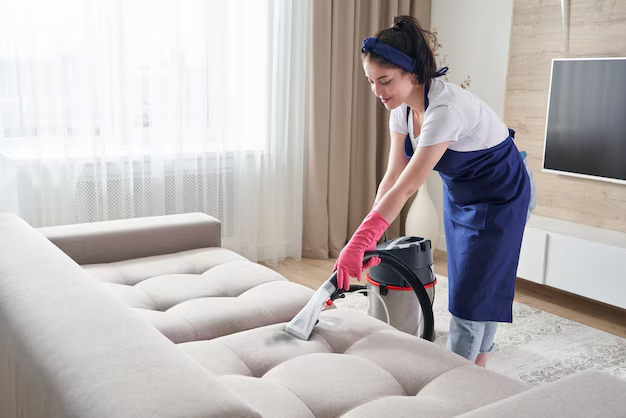
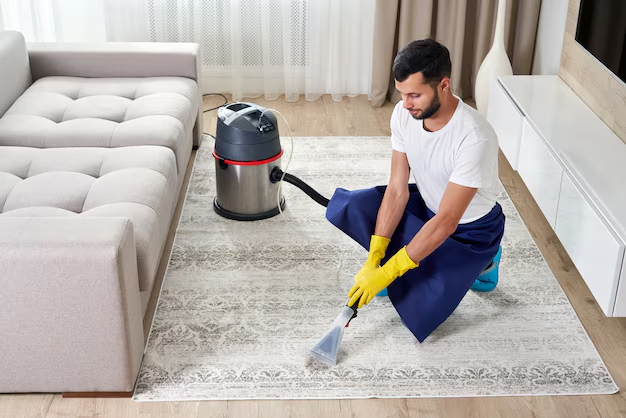
Your plan should also separate routine cleaning from periodic work. Vacuuming, mopping and rubbish removal might happen regularly, while carpet extraction, detailed glass cleaning and high-level dusting can be scheduled less often.
This distinction matters because a workplace can look clean while still needing deeper maintenance. A quick vacuum cannot replace proper carpet care, just as wiping a kitchen bench does not mean every cupboard has been cleaned.
Start With a Workplace Cleaning Assessment
Before choosing Commercial Cleaning Services, walk through your workplace and look at it from a visitor’s perspective. Start at the entrance and move through every area employees, customers and contractors use.
Notice where dirt collects, where fingerprints appear and which surfaces receive constant contact. Pay attention to bathrooms, kitchens, lifts, door handles, reception desks and shared equipment. These areas often require more attention than quiet rooms.
Professional commercial cleaners should also consider floor types. Carpet, vinyl, timber, concrete and tiles can require different cleaning methods and products. Using the wrong approach may create damage rather than improve presentation.
A proper assessment also considers working hours. If your office operates from eight until six, cleaning at midday may interrupt meetings and concentration. An evening or early-morning service could make much more sense.
Commercial Cleaning Services should fit around your business rather than forcing your business to work around the cleaners.
Commercial Cleaning Frequency: How Often Is Enough?
There is no universal answer to commercial cleaning frequency. The right level depends on staff numbers, foot traffic, industry, building size and the type of facilities available.
A busy workplace may need cleaning every weekday, while a smaller office might only require several visits per week. Bathrooms and kitchen areas can require more frequent attention than meeting rooms used twice a month.
Weather can also influence requirements. Albany businesses may experience periods when moisture, mud and outdoor debris are tracked into entrances and corridors. During those times, floor maintenance may need to increase even if the rest of the schedule remains unchanged.
Commercial Cleaning Services should therefore be reviewed when circumstances change. Hiring additional employees, extending opening hours, renovating a space or taking on more customers can all alter the amount of cleaning required.
The best test is simple: does the workplace still look and feel clean between scheduled visits? If not, the frequency may need adjustment.
Build a Commercial Cleaning Schedule
A commercial cleaning schedule should be clear enough that a manager can understand it quickly. It does not need twenty pages of corporate language. In fact, the simpler it is, the more likely people are to use it.
A practical schedule can divide work into regular, weekly and periodic tasks.
| Frequency | Examples of tasks |
| Each service | Bins, bathrooms, kitchen surfaces, touchpoints and visible floors |
| Several times weekly | Vacuuming, mopping, dusting and shared workspaces |
| Weekly | Detailed floor attention, glass touch-ups and lower-traffic areas |
| Monthly | Deeper cleaning and selected maintenance tasks |
| Periodically | Carpet extraction, high-level dusting and specialised cleaning |
This structure is only a starting point. Commercial Cleaning Services should be adjusted to match your actual workplace conditions.
For example, a business with a large customer-facing reception area may require daily attention there but only occasional cleaning in its storage area. A warehouse could need more frequent floor cleaning because of dust and movement, while a quiet consulting office may have different priorities.
Tailored Commercial Cleaning for Different Workplaces
Tailored commercial cleaning is about matching the service to the business. It avoids the one-size-fits-all approach that looks convenient on paper but often misses the details that matter.
An office may prioritise workstations, meeting rooms, bathrooms, kitchens and reception. Retail businesses usually need strong attention to customer-facing areas, entrances and glass. Warehouses can require more detailed floor maintenance and dust control.
This is particularly useful when comparing commercial cleaners Adelaide businesses use or researching a commercial cleaning company Adelaide providers offer. The location may be different, but the principle remains the same: understand the property first.
Commercial Cleaning Services should also account for sensitive areas. Some workplaces contain electronics, specialised equipment, confidential documents or surfaces that require specific products. A cleaning team should know where additional care is required before work begins.
Ask potential providers how they assess a property, whether they customise schedules and how they handle changes. Their answers can tell you a lot about how seriously they approach the job.
Workplace Cleaning Services and Workplace Safety
A workplace cleaning plan should consider more than appearance. Floors, bathrooms, kitchens, waste areas and cleaning chemicals all have practical safety implications.
Commercial Cleaning Services can support a cleaner and more organised environment when tasks are completed consistently and appropriate procedures are followed. Wet floors should be managed properly, chemicals should be used according to instructions and cleaners should understand site-specific hazards.
For broader guidance, Australian businesses can review Safe Work Australia’s guidance on duties under WHS laws.
The cleaning plan should not attempt to replace your broader workplace safety system. Instead, it should work alongside it. If there are restricted areas, specific access procedures or known hazards, include those details in the service instructions.
Good workplace cleaning services are organised, predictable and aware of the environment in which they operate.
How to Choose Professional Commercial Cleaners
Choosing professional commercial cleaners is not simply about finding the lowest quote. A cheap service can become expensive if tasks are regularly missed, communication is poor or the workplace needs repeated corrective cleaning.
Start by asking what is included. Does the quoted service cover bathrooms, kitchens, floors, rubbish, high-touch surfaces and common areas? Are periodic services included or charged separately?
Commercial Cleaning Services should also come with clear expectations about quality. Ask how supervisors check completed work and how missed tasks are reported and corrected.
Consistency matters too. If the cleaning team changes constantly, staff may have to explain the workplace requirements again and again. A provider that understands your property and maintains clear communication can make the entire process smoother.
AussieBrite Services can be considered by Albany businesses looking for a structured approach to workplace cleaning. You can explore the company’s services through AussieBrite Services‘ commercial cleaning information.
Commercial Property Cleaning: Look Beyond the Surface
Commercial property cleaning is not only about making the building photograph well. The aim is to maintain the spaces people actually use and keep recurring cleaning tasks under control.
Entrances deserve attention because they are the first physical contact most visitors have with your business. Bathrooms and kitchens need consistent care because they are shared spaces. Floors can require regular maintenance because dirt and grit are gradually walked across them throughout the day.
Commercial Cleaning Services can help businesses stay ahead of these recurring issues by turning cleaning into a scheduled activity rather than an emergency response.
Businesses should also consider areas that are easy to forget. Behind furniture, around skirting boards, under desks and in corners can accumulate dust even when the main floor appears spotless.
That is why periodic detailed cleaning belongs in your plan. Routine visits maintain the workplace, while deeper services deal with areas that do not require attention every day.
How to Review Your Commercial Cleaning Plan
Your cleaning plan should not be locked away and forgotten. Businesses change, and cleaning requirements change with them.
Review the plan when you hire more employees, increase operating hours, renovate the workplace or notice recurring complaints. If the same bathroom issue appears every week, for example, changing the frequency may be more sensible than repeatedly reminding people to clean it.
Commercial Cleaning Services are most effective when managers look at actual results. Walk through the property periodically and check whether the agreed standard is being maintained.
Ask employees for practical feedback as well. They use the kitchen, bathrooms, meeting rooms and shared areas every day, so they can often identify patterns that management does not see.
A review does not need to be complicated. Look at what works, what does not and what has changed. Then adjust the schedule accordingly.
Regular Commercial Cleaning Services: Why Consistency Matters
Regular Commercial Cleaning Services can make workplace maintenance more predictable. Instead of waiting for dirt to become obvious, your business follows a routine designed to prevent the property from reaching that point.
Consistency can also help maintain carpets, flooring, fixtures and common areas. The exact maintenance requirements depend on the materials and level of use, but regular attention generally makes it easier to manage everyday wear.
Commercial Cleaning Services also reduce the responsibility placed on employees. Your staff should not have to decide who is cleaning the bathroom after a long client meeting or whether someone remembered to mop the kitchen.
Their job is to run the business. A structured cleaning arrangement lets the cleaning team focus on the environment while employees focus on their own work.
Commercial Cleaning for Businesses: The Final Checklist
Before approving your plan, make sure you can clearly answer five questions: what gets cleaned, how often, when it happens, who is responsible and how quality is checked.
You can then add details such as access arrangements, security requirements, special surfaces, periodic services and contact procedures.
Commercial Cleaning Services should be simple to understand but detailed enough to avoid confusion. If a new manager can read the plan and understand what should happen without calling three people for clarification, it is doing its job.
Think of the plan as a practical operating tool. It should make cleaning easier to organise, easier to measure and easier to improve.
Conclusion
A successful cleaning plan starts with the workplace, not a generic package. Assess how people use the property, identify high-traffic areas, set realistic cleaning frequencies and create a schedule that separates everyday maintenance from periodic deep cleaning. Commercial Cleaning Services become far more effective when responsibilities, timings and quality standards are clear. Regular reviews then allow the plan to evolve as your Albany business grows.
If your workplace needs a cleaner, more professional environment without turning cleaning into another task on your team’s never-ending to-do list, it is worth speaking with AussieBrite Services. Discuss your property, operating hours and cleaning requirements, then build a practical solution around them. Contact AussieBrite Services to explore your options and take the next step towards a workplace that is ready for business every day.
-
1. How often should an office be professionally cleaned?
The ideal commercial cleaning frequency depends on the number of employees, foot traffic, facilities and daily activities. A busy office may need cleaning every weekday, while a smaller workplace may only need several visits per week. Bathrooms, kitchens and entrances often require more frequent attention than low-use rooms.
-
2. What should a commercial cleaning plan include?
A good plan should identify the areas being cleaned, individual tasks, cleaning frequency, service times, access requirements and quality expectations. It should also separate routine cleaning from periodic deep-cleaning tasks so less frequent maintenance is not forgotten.
-
3. Are Commercial Cleaning Services suitable for small businesses?
Yes. Commercial Cleaning Services can be scaled according to workplace size and usage. A small office does not necessarily need daily cleaning, while a compact retail or customer-facing property may need frequent attention because of higher foot traffic.
-
4. What is the difference between regular and deep cleaning?
Regular cleaning handles recurring tasks such as vacuuming, mopping, rubbish removal and bathroom maintenance. Deep cleaning focuses on areas that need more detailed attention, such as carpets, difficult-to-reach surfaces, accumulated dust and selected fixtures.
-
5. Should cleaning happen during business hours?
It depends on the workplace. Some businesses prefer early-morning or evening cleaning to minimise disruption, while others find daytime cleaning practical for high-use facilities. The best Commercial Cleaning Services schedule should work around your operating hours and security requirements.
-
6. How can I tell whether my cleaning plan is working?
Look at the workplace between scheduled services. Check whether bathrooms, kitchens, entrances, floors and customer-facing areas remain at the expected standard. Employee feedback can also reveal recurring problems. If issues repeatedly appear before the next service, your cleaning frequency or task list may need adjustment.