Restaurant cleaning in Adelaide should follow a structured daily, weekly and monthly schedule to maintain hygiene and meet Australian food safety requirements. Daily cleaning covers food preparation areas, equipment and frequently touched surfaces, while scheduled deep cleaning removes stubborn grease and built-up grime. Professional cleaning frequency depends on your kitchen’s size, operating hours and daily workload.
Why Regular Restaurant Cleaning Matters in Adelaide
Running a restaurant involves more than preparing quality meals. Your kitchen, dining areas and equipment must remain clean to protect customers and maintain a safe working environment.
Grease, food residue and moisture can accumulate quickly in commercial kitchens. Without proper restaurant cleaning, these conditions may encourage bacterial growth, attract pests and create workplace hazards.
Adelaide restaurant owners must follow applicable Australian food safety requirements. Food Standards Australia New Zealand provides guidance on cleaning and sanitising food premises.
A consistent cleaning schedule helps you identify hygiene issues before they become difficult to manage.
How Often Should You Schedule Professional Restaurant Cleaning?
The ideal restaurant cleaning frequency depends on kitchen size, operating hours, food preparation activities and customer numbers.
A small Adelaide café may have different requirements from a busy commercial kitchen preparing hundreds of meals daily.
Although every business has different needs, the following cleaning schedule provides a practical starting point.
1. Daily Restaurant Cleaning Tasks
Daily restaurant cleaning helps maintain hygiene throughout normal kitchen operations.
Your employees should complete these essential tasks:
- Clean and sanitise food preparation benches.
- Wash and sanitise cooking utensils.
- Remove food scraps and empty rubbish bins.
- Mop kitchen floors and remove spills.
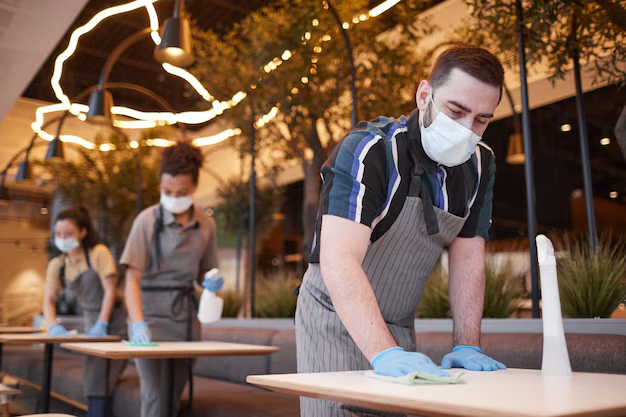
- Wipe dining tables and frequently touched surfaces.
- Clean toilets and handwashing facilities.
- Inspect food storage and waste disposal areas.
Food-contact surfaces may also require cleaning and sanitising between different preparation activities to prevent cross-contamination.
Daily cleaning prevents residue from accumulating and helps maintain a more manageable workplace.
2. Weekly Deep Cleaning
Weekly restaurant cleaning should target areas requiring more attention than everyday maintenance provides.
These tasks may include degreasing accessible cooking equipment, cleaning behind movable appliances and removing grime from kitchen walls.
You should also inspect floor drains, rubbish storage areas and difficult-to-access corners.
Restaurants preparing large quantities of fried foods may require additional grease removal throughout the week.
Maintaining a weekly checklist helps your employees identify areas that need attention.
3. Monthly Professional Cleaning
Monthly restaurant cleaning can help address stubborn grime and accumulated grease that routine maintenance may not remove.
Professional cleaners may undertake detailed floor scrubbing, commercial kitchen degreasing, wall cleaning and thorough cleaning of suitable surfaces.
Some restaurants benefit from fortnightly professional services, while others require less frequent visits.
The correct schedule depends on your kitchen’s workload, equipment condition and hygiene requirements.
Specialist exhaust canopy and duct cleaning should follow an appropriate maintenance schedule based on grease accumulation and fire safety risks.
Restaurant Cleaning Requirements Under Australian Food Safety Standards
Restaurant operators must understand their responsibilities under Australian food safety regulations.
The Australia New Zealand Food Standards Code includes requirements for maintaining clean premises, equipment and food-contact surfaces.
Cleaning and sanitising serve different purposes.
Cleaning removes visible dirt, grease and food residue. Sanitising reduces microorganisms to safer levels using appropriate methods.
Both processes support effective restaurant cleaning and help reduce contamination risks.
Certain food businesses must also meet additional food safety management requirements under Standard 3.2.2A.
Maintaining written schedules, training employees and checking completed tasks can help your business demonstrate consistent hygiene practices.
Signs Your Restaurant Needs Professional Deep Cleaning
Even with regular maintenance, certain warning signs suggest your restaurant cleaning schedule needs improvement.
Common indicators include:
- Persistent grease deposits around cooking equipment.
- Unpleasant odours from drains or waste areas.
- Sticky floors despite routine mopping.
- Dirt accumulating behind heavy appliances.
- Visible mould or moisture-related staining.
- Repeated hygiene concerns from employees.
These problems may require more thorough attention than ordinary surface cleaning.
For example, a busy restaurant in Adelaide may mop its kitchen floors every evening but continue experiencing grease build-up between tiles.
Professional floor scrubbing can help remove stubborn residue that normal mopping leaves behind.
Addressing these warning signs early helps maintain a cleaner and safer workplace.
How to Create an Effective Restaurant Cleaning Schedule
A practical restaurant cleaning plan should match your establishment’s daily activities and hygiene risks.
Start by identifying food preparation areas, frequently used equipment and surfaces requiring regular sanitisation.
Next, assign clear cleaning responsibilities to employees.
Follow these steps:
- Identify cleaning priorities: List kitchen equipment, dining areas, toilets and rubbish storage spaces.
- Set cleaning frequencies: Schedule tasks according to usage and contamination risks.
- Choose suitable products: Follow cleaning chemical labels and equipment instructions.
- Train employees: Explain correct cleaning and sanitising procedures.
- Review completed work: Inspect cleaned areas and update schedules when necessary.
Store cleaning chemicals away from food preparation and storage areas to help prevent contamination.
An organised routine makes restaurant cleaning easier to manage during busy trading periods.
Benefits of Hiring Commercial Kitchen Cleaning Specialists
Professional restaurant cleaning services can complement the work your employees complete each day.
Experienced commercial cleaners use suitable equipment and cleaning methods to address stubborn grease, difficult surfaces and accumulated grime.
This assistance may be particularly useful for restaurants operating extended hours or preparing large quantities of food.
Outsourcing selected tasks also allows kitchen employees to concentrate on food preparation and customer service.
However, professional cleaning does not replace your responsibility to maintain food safety throughout daily operations.
When to Call a Professional
Consider professional restaurant cleaning when routine maintenance no longer removes stubborn grease, persistent odours or accumulated grime.
You may also require additional assistance before reopening after renovations, following extensive kitchen maintenance or when introducing a structured cleaning schedule.
AussieBrite Services Pty Ltd provides commercial cleaning services and can discuss your Adelaide restaurant’s individual requirements.
Contact AussieBrite Services Pty Ltd to enquire about professional cleaning solutions and arrange a schedule suited to your kitchen’s operating needs.
Conclusion
Maintaining effective restaurant cleaning practices requires consistent daily attention, scheduled deep cleaning and regular inspections.
Your ideal cleaning frequency depends on kitchen activity, equipment usage and food safety risks. A structured schedule helps maintain hygienic food preparation areas and cleaner working conditions.
For professional restaurant cleaning in Adelaide, contact AussieBrite Services Pty Ltd to discuss your premises and cleaning requirements.
Frequently Asked Questions
How often should a restaurant kitchen be deep cleaned?
Commercial kitchens require daily cleaning, with more detailed cleaning scheduled according to equipment usage and hygiene risks. Weekly deep cleaning and periodic professional services provide a useful starting point.
Is professional restaurant cleaning mandatory in Adelaide?
Australian food safety standards require businesses to maintain clean premises and equipment. However, restaurants are not generally required to hire an external cleaning company. Properly trained employees can complete appropriate cleaning tasks.
What does professional restaurant cleaning include?
Professional services may include commercial kitchen degreasing, floor scrubbing, wall cleaning, waste area cleaning and detailed surface cleaning. The exact services depend on the cleaning provider and agreed requirements.
Can restaurant employees handle daily cleaning themselves?
Yes. Properly trained restaurant employees can complete routine cleaning and sanitising tasks. Professional cleaners can assist with more demanding work requiring specialised equipment or additional labour.