In 2026, healthcare environments are evolving rapidly, and with that shift, the demand for highly specialized hygiene solutions has reached new heights. Modern patients expect not only advanced treatments but also impeccably clean and safe surroundings, making medical centre cleaning services an essential component of delivering quality care.
This is where medical centre cleaning services play a critical role. From reducing infection risks to maintaining strict compliance with health regulations, medical centre cleaning services are no longer just a support function; they are a core component of quality healthcare delivery. As facilities expand and technologies advance, medical centre cleaning services are becoming smarter, more efficient, and deeply integrated into daily operations.
The transformation is driven by innovation, sustainability, and precision. Today’s medical center cleaning services leverage cutting-edge tools such as electrostatic disinfection, AI-driven monitoring systems, and eco-friendly cleaning agents to ensure maximum effectiveness with minimal environmental impact.
These services are designed to meet the unique needs of hospitals, clinics, and diagnostic centers, ensuring every surface from high-touch areas to sensitive equipment is thoroughly sanitized. As a result, medical centrer cleaning services are setting new standards in safety and operational excellence across healthcare facilities worldwide.
Moreover, the importance of maintaining a sterile and welcoming environment has never been greater. With rising awareness about infection control and patient safety, healthcare providers are investing heavily in professional medical centre cleaning services to build trust and enhance their reputation
These services not only help in preventing cross-contamination but also contribute to better patient outcomes and staff well-being. In 2026, medical centrer cleaning services are not just transforming facilities they are redefining what it means to deliver safe, reliable, and patient-centered care.
Why Medical Centre Cleaning Services Matter More Than Ever
You’ve probably read stories about hospital-acquired infections or even seen news on TV. Here’s the deal: even a seemingly clean surface can harbor germs. High-touch spots door handles, bed rails, and charts can transmit disease if not cleaned properly.
The Australian Guidelines for Infection Control highlight daily cleaning of such surfaces with a detergent to cut down pathogens. In simple terms: routine cleaning is our first line of defense.
With events like COVID-19 fresh in memory, hygiene is now an everyday concern. Hospitals have to go beyond the old mop-and-gel routine. Imagine a world where spills trigger alerts or robots hum down corridors, picking up every speck.
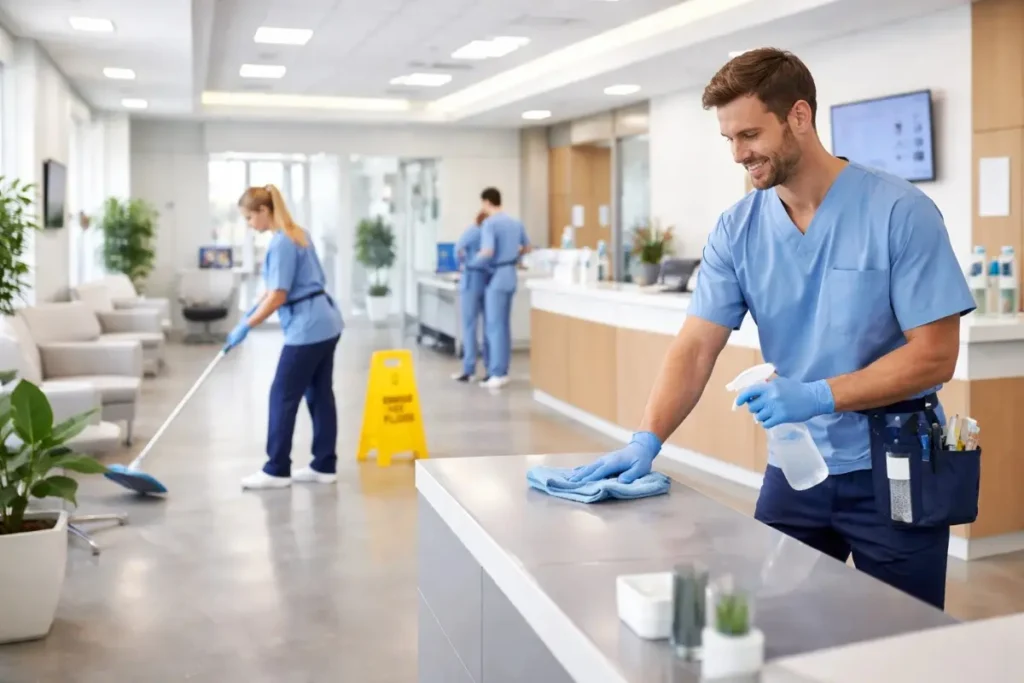
That future isn’t tomorrow it’s now. Patients today notice if a medical centre is dirty, and it affects trust.
Conversely, a gleaming reception and shiny floors signal professionalism. In fact, one cleaning firm quipped that “a clean medical facility… signifies you are professional and offering state-of-the-art facilities.” I’d say a clinic that looks like a GQ cover shoot inspires more confidence than one that looks neglected.
Beyond feel-good vibes, there’s data: conservative estimates suggest about 1 in 25 hospital patients pick up an infection during their stay. That’s 4% of patients, a number no one wants. Good cleaning cuts those odds. Every disinfected exam room and sanitized lunchroom keep both patients and staff safer. So modern medical centre cleaning services have a giant mission: prevent illness.
-
- What advanced cleaning does: It’s not just vacuuming corridors. Today’s services involve targeted protocols like wearing gloves and barriers when needed and scrubbing from “clean to dirty, high to low,” according to best-practice guides.
-
- Who does it: It’s a special breed of cleaner. Many hospitals now employ trained technicians who know biohazard protocols. These folks use hospital-grade disinfectants and follow strict checklists every time a room is cleaned.
From Brooms to Bots: Tech Takes Over Cleaning
If you thought cleaning meant back-breaking elbow grease, hold onto your gloves. 2026 tech is a game-changer. Cleaning robots are no longer the stuff of cartoons they’re quietly roaming corridors after hours. These autonomous scrubbers meticulously map each floor, ensuring they cover every corner.
Unlike tired humans, robots don’t slack off at 2am. Some use ultraviolet light: think of a small Roomba on steroids that zaps viruses in seconds.
A Sydney hospital has even adopted the THOR UVC robot, which bathes operating theatres in germ-killing UV and achieves a 99.9999% bacterial kill in minutes. That’s like mowing down invisible bacteria at lightspeed pretty sci-fi!
Ultraviolet C (UVC) robots can flood a room with germicidal light, delivering rapid 99.9999% disinfection. IoT is part of the revolution too. Sensors in restrooms can now signal when a stall needs attention; foot-traffic counters can tell cleaners which lobbies got crowded and might need a wipe-down.
Smart dispensers monitor soap or sanitizer use and auto-reorder when supplies run low. Essentially, cleaning managers get real-time data to work smarter, not harder.
And let’s talk consistency: automated systems follow protocols to the T. A cleaning robot will disarm a room of pathogens exactly the same way every time. It sprays, vacuums, or scrubs on schedule, unlike a human who might forget to swivel behind a trash bin. This means medical centre cleaning services now ensure every patient room or waiting area gets exactly the right touch each visit.
Cleaner, Greener, Safer: Sustainability Meets Hygiene
If 2026 feels like a green utopia, cleaning has a part in that too. Hospitals are notorious for chemical use, so newer products are biodegradable and eco-friendly.
Many services use plant-based detergents or refillable soap stations to cut waste. Guess what? Going green isn’t just altruism; it’s increasingly mandated. We have strict environmental laws in Australia that even cleaners must follow, and clients often demand sustainability reports alongside cleaning logs.
Meanwhile, clever materials help. Imagine hospital floors made of hydrophobic tiles that repel water and stains; such floors need scrubbing far less often. Or think of copper-coated door handles and bed rails.
Copper ions continuously kill bacteria on contact, so you’ve got a 24/7 passive cleaner built right in. These innovations mean less elbow grease and more lasting cleanliness.
Table: Modern Cleaning Technologies at a Glance
| Technology | How It Works | Benefits | Example Use |
|---|---|---|---|
| UV-C Disinfection | The robot shines UV light that disrupts microbe DNA | Kills 99.9999% of germs in minutes | Operating theatres (THOR UVC robot) |
| Cleaning Robots | Autonomous vacuums/scrubbers map and clean floors | 24/7 cleaning, reaches nooks, consistent | Large corridors and lobbies (e.g., Pudu cleaning robots) |
| IoT Sensors | Detect spills, crowding, supplies (soap, etc) | Real-time alerts, optimized schedules | Smart restrooms, patient wait areas |
| Antimicrobial Coatings | Special paints or coatings that continuously kill microbes | Reduces cleaning frequency, durable | Wall surfaces, handrails, medical carts |
| Eco-friendly Products | Biodegradable cleansers, refill stations | Lower toxic load, meets ESG goals | All cleaning tasks; sustainable supply chains |
Each of these is making medical centre cleaning services in Adelaide smarter and more sustainable. The bottom line? Our hospitals are cleaner and kinder to the planet than ever.
The Human Touch: Expertise and Training
While tech steals headlines, people are still key. (Robots don’t chat up the old ladies in waiting rooms.) Cleaning crews are now tech-savvy. In Adelaide and beyond, janitors are being upskilled into “cleaning techs.” They learn to operate UV machines, interpret data dashboards, and adapt on the fly.
Some specialise in high-risk areas wielding advanced disinfectants and protective gear. Others coordinate rapid response if a patient with an infectious disease leaves a room.
Trust matters. The public expects honesty and diligence from medical centre cleaning services. That’s why many providers transparently share their cleaning protocols.
After a scrub session, cleaning teams often use ATP bioluminescence tests or swab cultures (microbe checks) to prove surfaces are truly clean. In other words, they turn cleaning into a science and you don’t just have to take their word for it. Compliance audits are common, ensuring every clinic follows the SA Health Cleaning Standard and the national infection guidelines.
On a lighter note, word-of-mouth counts too. Imagine this: a patient impressively posts online, “Shout-out to Dr. Jones’s clinic for being spotless!” That’s marketing you can’t buy.
Many medical centers see keeping ultra-clean as part of their brand. One savvy cleaner even joked that excellent cleaning is like “free promotion” a happy patient will brag about your facility’s hygiene. So yes, every gleaming corridor is also good PR for a hospital or clinic.
Spreading Out: From Aged Care to Holiday Rentals
Here’s an unexpected twist: the innovations in medical centre cleaning services are rippling into everyday life. For instance, aged care facility cleaning services have been borrowing hospital protocols for years, since elderly residents are high-risk too. Now things like UV-cleaned common rooms or sensor-monitored restrooms show up in retirement homes.
Even Airbnb hosts have caught on. Holiday rental cleaning services now advertise “hospital-grade” sanitising. Many vacation homes come with checkpoints like “100+ point cleans” and visible guest logs basically mini hospital standards, but for beach cottages.
And what about families? If you care about this, you’ll find similar buzzwords in childcare cleaning services or daycare cleaning services. Daycares spray down toys and mats with medical disinfectants because germs spread fast among toddlers. A recent case study on hygiene in childcare noted that rigorous cleaning dramatically cuts sick days.
Even your home cleaning crew in Adelaide is influenced. Some house cleaners now use microfiber cloths with silver ions or hospital-grade vacuum filters if the homeowner requests. You could say House Cleaning Adelaide outfits are leveling up after all, who wouldn’t want their whole house as fresh as a clinic lobby?
What the Future Holds and a Call to Action
The moral? Everything is getting cleaner, more high-tech, and yes, safer. In the years ahead, expect even more surprises: maybe robots guided by AI to detect “dirt hotspots,” or apps that let you rate your clinic’s cleanliness in real-time. The only way is up.
If you’re a clinic manager or facility owner reading this, consider partnering with a forward-thinking provider that follows standards set by the National Health and Medical Research Council. Ask about UV robots, eco-friendly supplies, and rigorous training. Or if you’re just a patient or parent, you now know to look for those sparkle cues: polished floors, hand sanitizer stations, and maybe even a disinfectant robot in the hallway
Don’t let cleaning be an afterthought. In 2026 and beyond, the battle against germs is waged with cutting-edge tech and old-fashioned diligence together.
After all, shining floors and clean air are more than cosmetic; they’re a commitment to safety and trust. Medical centre cleaning services have transformed and our health depends on it.
Ready to see the difference? Next time you walk into a clinic or hospital, take a breath (no, really, breathe deep) and look around. You might just spot a robot assistant whirring by or at least a human cleaner confidently waving a high-tech gadget. If it wasn’t obvious before, it should be now: in 2026, clean really is king of the clinic.