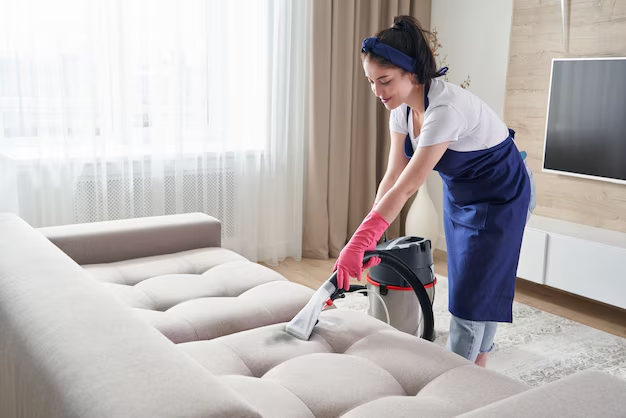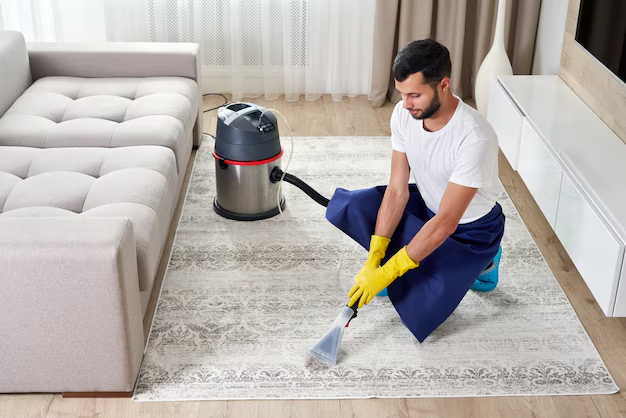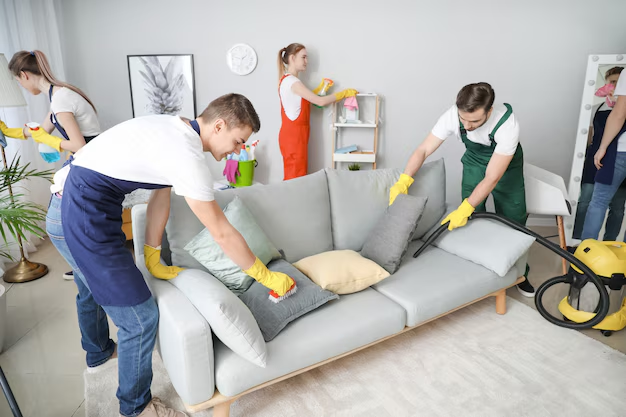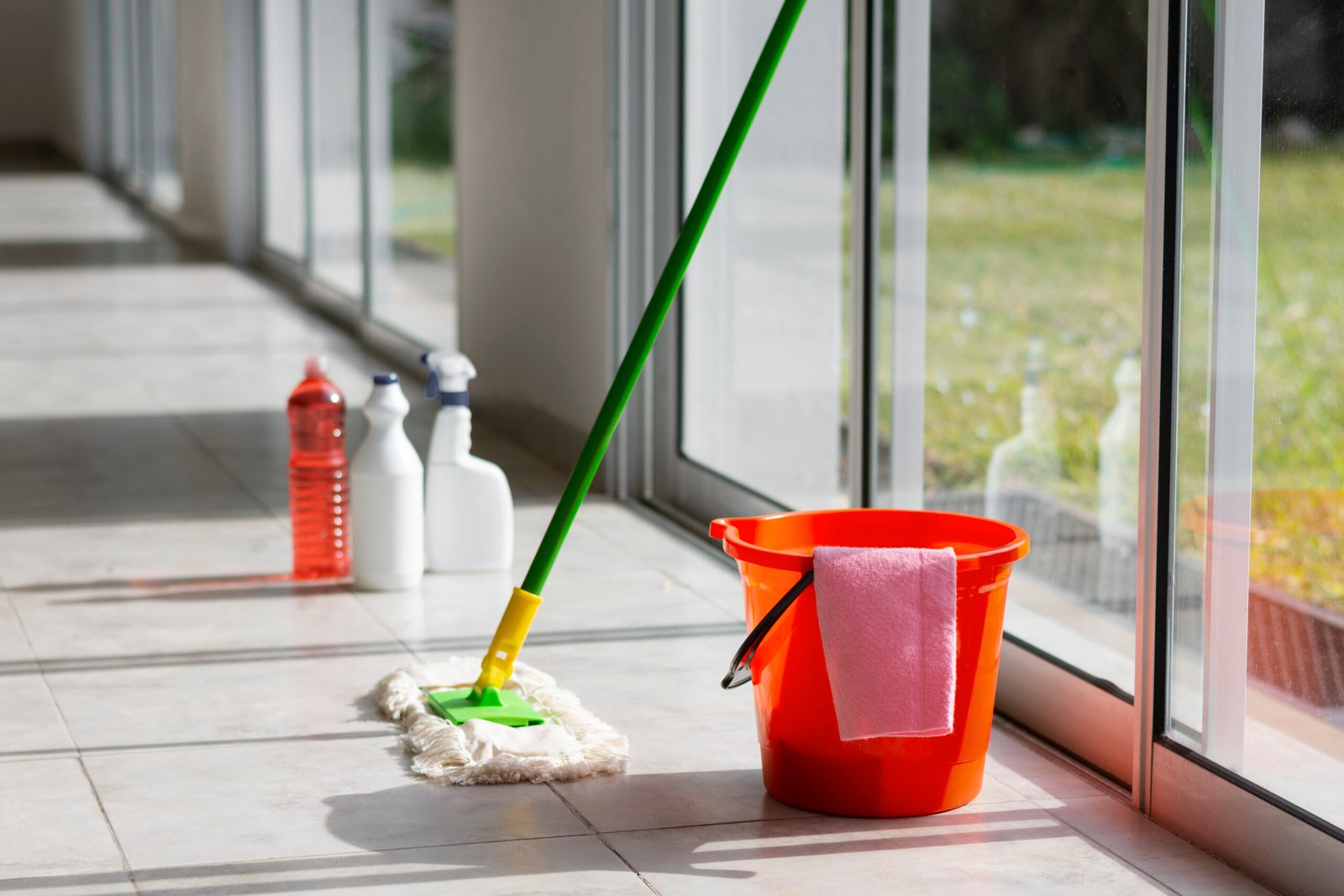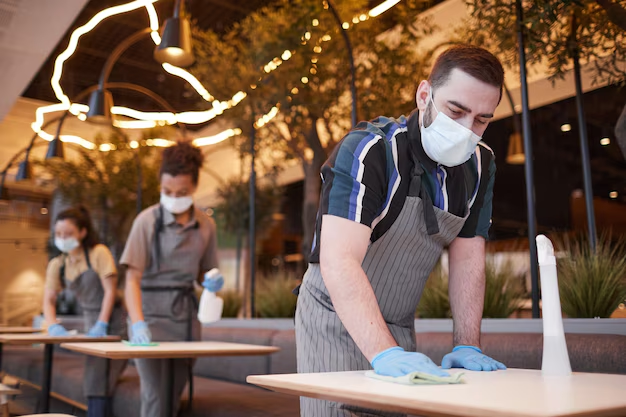
Primary school cleaning needs more care than cleaning a regular business facility. Every day, hundreds of kids use classrooms, play areas, and other shared spaces at schools. For this reason, cleaning staff need to be well-trained to keep students and teachers safe, clean, and comfortable.
Schools in Adelaide are becoming more aware of cleanliness, infection control, and the importance of planned cleaning schedules. Every area, from classrooms and hallways to playground equipment and facilities, needs a planned approach. Well-trained cleaning professionals make a big difference in keeping study areas healthy.
Training is not merely giving someone a mop and a list of things to do. It means understanding how schools work, choosing the correct cleaning procedures, and being consistent. When staff are properly trained, primary school cleaning becomes organized, efficient, and consistent throughout the entire building.
Understanding School Cleaning Responsibilities
A clear description of what cleaning the school means should be the first step in training. Schools have many high-touch areas and rooms designed just for kids, unlike most commercial buildings. Cleaning teams need to know how each room is used during the school day. Different cleaning methods are needed for classrooms, corridors, staff rooms, and bathrooms.
For instance, classroom desks and shared learning materials need to be cleaned every day. Dust and trash from playground activities collect in the hallways. To keep them clean, bathrooms need to be cleaned several times a day.
Staff training should focus on ensuring students’ safety and preventing the spread of infections. A small oversight, such as leaving cleaning chemicals accessible, could become a serious risk during primary school cleaning.
Key Skills Every Cleaning Staff Needs
Practical instruction is important for a school cleaning program to work. Staff should learn specialized skills to clean quickly and safely. Staff should learn these important skills:
- Correct use of disinfectants and cleaning chemicals
- Safe handling of cleaning equipment and machinery
- Identifying high-touch surfaces such as door handles and desks
- Understanding cross-contamination prevention
- Maintaining quiet cleaning routines during school hours
- Waste disposal and recycling procedures
These abilities of primary school cleaning give cleaners the confidence to do their jobs and consistently maintain the school’s hygiene standards.
Cleaning Zones Within a School
It is easier to train workers when they understand the different areas of a school building. Different areas need different levels of cleaning.
| School Area | Cleaning Priority | Typical Cleaning Tasks |
|---|---|---|
| Classrooms | High | Desk sanitising, floor cleaning, whiteboard wiping |
| Bathrooms | Very High | Disinfecting sinks, toilets, floors |
| Hallways & Entrances | Medium | Dust removal, floor mopping |
| Staff Rooms | Medium | Kitchen surface cleaning, rubbish removal |
| Play Areas | High | Equipment sanitisation and debris removal |
Dividing the school into zones helps staff keep track of time and ensure that all areas of the campus are cleaned thoroughly.
Training Staff for Childcare Cleaning Standards
Early learning or childcare rooms are typically seen in primary schools. Because younger kids are more likely to get sick from germs, workers should be trained in cleaning requirements for childcare. Cleaners need to know how to consistently clean and disinfect toys, mats, and other learning tools used by multiple people. Cleaners should clean tables and chairs several times a day.
Choosing the right products should also be part of the training for primary school cleaning. Some strong chemicals might not be safe to use in places where small children play. Instead, staff should use disinfectants that are safe for kids yet still kill bacteria. Cleaners can keep kids safe and clean by understanding how to clean childcare settings.
Adapting Techniques from Office Cleaning
Many cleaning teams have already cleaned offices, which might be helpful when cleaning schools. But the training should emphasize how schools are different from offices. Cleaning offices usually means cleaning desks, conference rooms, and reception areas. On the other hand, schools have high-energy settings where people are always touching surfaces.
For instance, libraries and classrooms with shared computers need to be cleaned frequently. Cleaners should also pay more attention to door handles, lockers, and drinking fountains. Teaching staff how to change office cleaning routines in schools ensures primary school cleaning stays high throughout the day.
Equipment Training for Gym Cleaning Service Areas
School gyms and sports halls require specialised cleaning knowledge. These areas are often used for sports, assemblies, and other events, which means the floors and equipment are heavily used. Staff should learn to clean gyms in a way that keeps both equipment and floors safe. Training should include:
- Cleaning gym mats and sports equipment safely
- Removing sweat and bacteria from high-contact areas
- Using appropriate floor cleaning machines for sports surfaces
- Maintaining slip-resistant flooring conditions
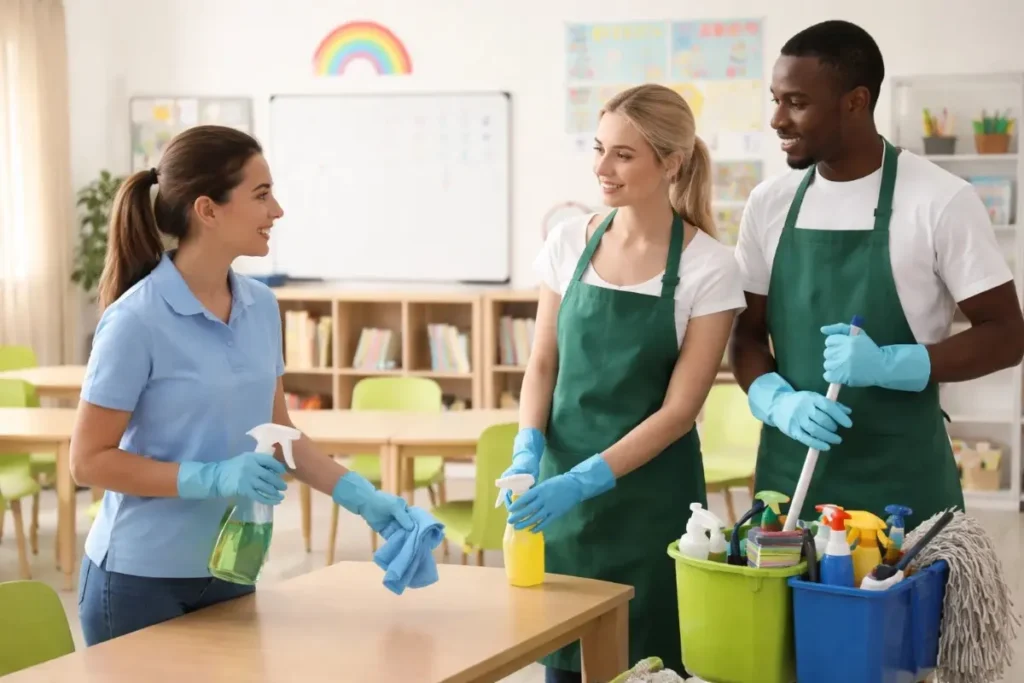
In primary school cleaning, the right way of cleaning the school gym prevents smells, bacteria, and damage to expensive gym equipment.
Cleaning After Renovations and School Upgrades
Schools often get new classrooms, new buildings, or new facilities. Once the repair is complete, the building must undergo thorough cleaning before students return. This is where knowledge of post construction house cleaning services becomes useful. Cleaners need to be very careful when cleaning up construction dust, paint residue, and debris.
Primary school cleaning training should cover how to prevent dust from spreading and how to dispose of unwanted materials safely. Cleaners should also check air vents, windows, and other areas where fine dust could accumulate. Schools can promptly and securely resume classrooms by adopting structured post-construction cleaning processes.
Kitchen and Canteen Hygiene Training
Many primary schools have modest cafeterias or canteens where food is prepared. Like restaurant cleaning services, these areas need to be kept very clean. Cleaning workers should know how important it is to follow food safety rules and stop contamination.
Some common training points are:
- Sanitising food preparation surfaces
- Cleaning kitchen floors and grease-prone areas
- Maintaining clean storage shelves and equipment
- Proper waste handling in food areas
These areas in primary school cleaning lower the risk of foodborne illness and help students prepare meals safely.
Teaching Safety and Chemical Awareness
Cleaning supplies can be useful, but only if cleaners know how to utilize them. Employees need to learn how to handle chemicals as part of their training. Cleaners need to know how to read product labels, measure solutions appropriately, and store chemicals safely. During primary school cleaning, cleaners should also wear gloves and masks as part of their routine.
Adelaide schools expect cleaning crews to observe safety rules at work and to keep dangers to children and staff to a minimum. Cleaning teams in schools should follow the Safe Work Australia workplace hygiene guidelines, which outline safe cleaning practices and proper handling of cleaning chemicals. Everyone is safe when they get clear training on how to handle chemicals.
Building Consistency Through Ongoing Training
One-time training should not be the only thing that sets cleaning standards. Schools benefit from regular primary school cleaning training sessions that keep staff up to date on the best practices. Cleaners can learn new ways to keep things clean, how to utilize new equipment, and better cleaning processes through regular refreshers. It also makes people responsible and professional.
Supervisors can also check the school buildings frequently and provide input to ensure quality remains consistent. Regular primary school cleaning training keeps the cleaning crew confident and able to do their jobs well.
Conclusion
Training cleaning staff properly is essential to maintaining safe, hygienic learning environments. Each part of a school has its own set of skills and procedures, from cleaning classrooms and caring for kids to keeping the gym and cafeteria clean.
A well-organized training program teaches employees their duties, how to do their jobs quickly, and how to stay safe. Schools are healthier and better organized for kids and instructors when cleaners have the necessary skills and gear.
Call Aussie Brite Services immediately if you need trustworthy, reliable, and trained cleaners for primary school cleaning. Our professional staff provides reliable cleaning services for schools, businesses, and companies across Adelaide.